
There are still places in South America where the map feels incomplete.
Not politically, not geographically, but biologically.
Places where a forest can hide an animal that local people have known for generations, yet science has never formally recognized.
In September 2026, Bolivia became one of those places.
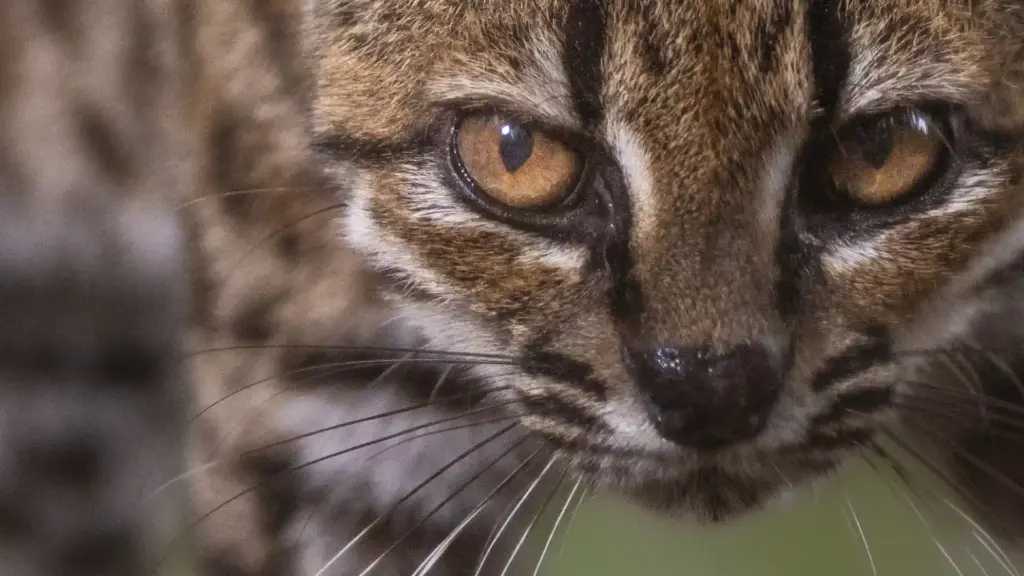
From the cloud forests of the Yungas emerged Leopardus tilcayo, a tiny spotted wild cat now recognized as a distinct species. The peer-reviewed research published in Current Biology identified the tilcayo as a separate evolutionary lineage within South America’s tiger-cat group, making it the first newly described living wild cat species in more than a century.
The discovery immediately travelled around the world.
But the story is more interesting than the headline suggests.
The tilcayo was not suddenly “found” by science in an untouched forest. People in the Yungas had already been calling this small cat tilcayo long before researchers gave it a Latin name. The scientific team deliberately retained that local word when naming the species, acknowledging knowledge that existed well before formal taxonomy caught up.
That is perhaps the most compelling part of the story.
Bolivia did not suddenly acquire a new animal.
Science finally learned to see one that had been there all along.
A cat hiding in plain sight
At first glance, Leopardus tilcayo does not look dramatically different from other small spotted cats of South America.
It belongs to the tiger-cat complex, a group of small wild felines whose taxonomy has confused scientists for decades. Several populations look similar enough to be mistaken for one another, even when their evolutionary histories are quite different.
That is exactly what happened here.
The new study compared complete genomes from 38 individuals of the genus Leopardus, including modern animals and museum specimens. The results showed that what had once been treated more simply is actually a group of five distinct tiger-cat species. One of them is the Bolivian tilcayo.
Genomic evidence suggests its lineage separated from its closest relatives around 1.4 million years ago.
That changes the scale of the discovery.
This is not merely a local variation or an unusual individual.
It is a distinct evolutionary branch.
The same research also identified a newly described Peruvian subspecies, Leopardus tigrinus antisuyo, reinforcing how much remains unresolved about the small wild cats living along the Andes-Amazon transition.
The animal that started the story
The scientific trail began years before the species received a name.
A young wild cat had been found near forest in the Yungas and was initially mistaken for a domestic kitten. Its behaviour eventually made clear that it was anything but domestic, and the animal later reached Senda Verde Wildlife Sanctuary, near Coroico.
That is where Bolivian biologist Paola Nogales-Ascarrunz became involved.
She noticed that the animal did not quite fit the characteristics expected of the known tiger cats. What began as curiosity eventually became years of genetic analysis involving researchers from Bolivia and international institutions.
Nogales-Ascarrunz and Enzo Aliaga-Rossel, both researchers connected to the Universidad Mayor de San Andrés, were central to the Bolivian side of that work. Early DNA extraction and genetic testing were carried out at UMSA before the research expanded into a broader genomic comparison with specialists abroad.
That detail matters.
This was not science arriving in Bolivia from somewhere else.
Part of the discovery was built through Bolivian researchers, Bolivian institutions and local knowledge.
The animal itself became a bridge between all three.
Smaller than many domestic cats
The tilcayo is remarkably small.
The best-known male measures roughly 42.5 to 50.5 centimetres from head to body, with a tail around 25 to 26.5 centimetres long. Its weight is around 1.3 to 1.4 kilograms, making it smaller than many domestic cats.
Its pale brown coat is marked by large dark spots and rosettes.
Yet appearance alone was not enough to establish a new species.
That is one of the reasons small wild cats are so difficult to classify. Two animals may look almost identical in the field while their genomes reveal that they have followed separate evolutionary paths for hundreds of thousands of years.
Modern genomics allowed researchers to see differences that a photograph, a skin or even a camera-trap image could easily miss.
In this case, science needed genetics to reveal what the forest had already been keeping separate.
Why the Yungas matter
To understand the tilcayo, it helps to understand the landscape it comes from.
En Bolivian Yungas lie along the eastern slopes of the Andes, where high mountains descend rapidly toward the Amazon basin.
This is one of the most dramatic ecological transitions in South America.
Leaving La Paz, the landscape can change within only a few hours. Thin high-altitude air gives way to mist, orchids, dense vegetation and subtropical forest as the road drops from the Altiplano toward Coroico. The reference material you shared captures that transition especially well: a journey can move from high-Andean terrain into the humid forests surrounding Senda Verde in roughly two to three hours.
For travelers, it feels like entering another country.
For biologists, it is something even more significant.
These steep environmental gradients create isolated habitats where species can evolve in relatively small geographic areas. That can produce extraordinary biodiversity, but also vulnerability.
The current scientific record places the type locality of Leopardus tilcayo in Nor Yungas, La Paz, at approximately 1,570 metres above sea level. Researchers are still trying to determine how far beyond this area the species occurs.
Which means one of the most basic questions is still unanswered:
How much forest does the tilcayo actually have?
Science has named it. Now it has to understand it.
The formal description of a species often sounds like the conclusion of a discovery.
In reality, it is the beginning.
Scientists still do not know the tilcayo’s full geographic range, population size, diet, reproduction, habitat requirements or how frequently it occurs in the wild.
Even its conservation status remains uncertain.
Researchers have already highlighted pressures affecting the Yungas, including habitat loss, agricultural expansion, fires and mining. Small wild cats can also face persecution when they take poultry, as well as capture by people attempting to keep them as pets.
This is why taxonomy matters far beyond academic classification.
If several populations are treated as one widespread species, they can appear relatively secure.
If genomic research later reveals that those populations are actually distinct species with much smaller ranges, the conservation picture changes immediately.
A species cannot be protected intelligently if nobody knows that it is a species in the first place.
The tilcayo now has a scientific name.
The next challenge is understanding what that name needs to survive.
A name that came from the forest
There is something unusually fitting about the name itself.
Researchers did not create it in a laboratory.
They retained tilcayo, the word already used by communities in the Yungas for this small wild cat. The researchers have said that local residents could not necessarily explain the origin of the word; it was simply a name inherited across generations.
That gives Leopardus tilcayo a rare continuity between local knowledge and scientific nomenclature.
In a region where natural history is often described through the language of “discovery,” this is an important distinction.
The people living beside the forest did not need a genome sequence to know the animal existed.
Science needed the genome sequence to understand what it was.
What this means for travelers
A discovery like this can create an uncomfortable temptation in tourism.
A rare animal suddenly becomes famous, and almost immediately someone asks:
Can I see it?
That is not the question View believes travelers should begin with.
The best-known individual associated with the research is under protected care at Senda Verde, and a newly recognized wild species should not become a guaranteed attraction simply because international media attention has made it valuable. The animal’s welfare and the scientific work around it have to come first.
The more interesting travel question is:
What does the tilcayo reveal about the landscape around it?
That opens a far richer journey.
The Yungas are not simply the location of a new cat.
They are the ecological hinge between two enormous worlds: the Andes and the Amazon.
A traveler can begin in La Paz, surrounded by peaks, dry highland light and the urban geography of the Altiplano, then descend into cloud forest where the climate, vegetation and wildlife change almost by the kilometre.
Senda Verde adds another layer to that story through its work with wildlife affected by trafficking, habitat loss and human interference. The original material you shared describes a sanctuary caring for a broad range of rescued Andean and tropical species while also contributing to rehabilitation and environmental education.
The tilcayo becomes a way into that larger conversation.
Not a trophy sighting.
A reason to look more carefully.
Bolivia beyond Uyuni
For many international travelers, Bolivia is still reduced to a handful of images.
The white horizon of Uyuni.
Lake Titicaca.
La Paz from above.
Perhaps a train cemetery or a flamingo lagoon.
Those places deserve their reputation, but they are only fragments of the country.
En Ver Signature Travels, we design and operate private luxury journeys across Bolivia, including the Altiplano, Lake Titicaca, Uyuni and the country’s Amazonian and Andean landscapes. Our existing Bolivia portfolio already connects these very different environments through private, tailor-made journeys.
For us, the tilcayo story reinforces something we have long believed about Bolivia:
its greatest luxury is not excess. It is access to extraordinary landscapes that still feel genuinely alive.
A sophisticated journey through Bolivia can move from La Paz into the Yungas, return to the high plateau, cross Titicaca, continue toward Uyuni and then, if time allows, descend again toward tropical lowlands.
Very few countries can produce that ecological contrast within a single itinerary.
And very few still retain the sense that science itself has not finished understanding what lives there.
That is what makes Bolivia different.
From the Andes to the cloud forest
A well-designed Bolivia journey should not simply connect icons.
It should connect ecosystems.
La Paz offers one of the most dramatic starting points anywhere in South America: an immense city suspended at altitude, framed by high peaks and linked vertically through its cable-car system.
From there, the descent toward the Yungas changes the entire sensory experience.
Air becomes warmer.
Vegetation closes in.
Mist replaces the hard clarity of the Altiplano.
The road begins to feel less like transport and more like a biological transect.
That journey can then continue in the opposite direction.
Back toward the high plateau, where vicuñas move across open grassland and Titicaca creates an almost marine horizon at altitude.
Farther south, Uyuni and the surrounding lagoons reveal yet another ecosystem: flamingos, vizcachas, vicuñas and high-altitude wetlands living beside one of the planet’s most extreme geological landscapes. The reference you shared uses exactly this progression—from Yungas to Titicaca to Uyuni—to show how remarkably diverse Bolivia is within a relatively compact journey.
Seen this way, Leopardus tilcayo is not an isolated curiosity.
It belongs to a country defined by transitions.
A discovery that makes Bolivia feel larger
There is something almost improbable about discovering a new species of cat in 2026.
Cats are among the most recognizable animals on Earth.
They are photographed, studied, tracked and mythologized.
And yet in the cloud forests above the Amazon, a distinct feline lineage remained scientifically unrecognized until now.
That should change how we think about Bolivia.
Not as an empty wilderness waiting to be “discovered.”
But as a country where traditional knowledge, modern science and remarkably complex landscapes are still revealing different versions of the same place.
The original mailing put this beautifully in another way: somewhere between the Andes and the Amazon, Bolivia remains unfinished.
We would go one step further.
Bolivia is not unfinished because it lacks something.
It feels unfinished because our understanding of it is still catching up.
Traveling Bolivia with View
For travelers who want to go beyond a conventional Bolivia itinerary, View can incorporate the Yungas into a wider private journey through the country.
That might mean beginning with acclimatization and private exploration in La Paz, descending into the cloud forest, then continuing toward Lake Titicaca and the Altiplano before moving south into Uyuni.
Or it might form part of a longer South American journey linking Peru and Bolivia through the high Andes.
The objective is not to build an itinerary around chasing the tilcayo.
It is to understand the landscapes that made such a discovery possible.
That distinction matters.
Because luxury travel in Bolivia should not be about insulating a traveler from the destination.
It should create the conditions to experience it more deeply.
At View, that means private logistics, carefully selected accommodations, expert guiding and access designed around the geography itself—from the Altiplano to the cloud forest.
The tilcayo simply gives us one more reason to look closer.
A small cat, a much larger story
Leopardus tilcayo weighs barely more than a kilogram.
Yet its discovery tells a surprisingly large story.
About how much biodiversity remains poorly understood.
About the value of museum specimens and modern genomics.
About Bolivian scientists building knowledge from within the country.
About local communities preserving names long before scientific classification arrives.
And about forests that may contain species we are only beginning to recognize at the same moment those ecosystems face increasing pressure.
The tilcayo has finally entered the scientific record.
What happens next will depend on how well researchers can understand its habitat—and how seriously that habitat is protected.
For travelers, the lesson is simpler.
Bolivia still rewards curiosity.
And sometimes the most extraordinary part of a journey is realizing that the destination itself is still being discovered.
Preguntas frecuentes
What is the new wild cat species discovered in Bolivia?
The species is Leopardus tilcayo, a small spotted tiger cat formally described in 2026 from Bolivia’s Yungas region. Genomic research showed that it represents a distinct evolutionary lineage.
Why is Leopardus tilcayo important?
It is the first newly described living wild cat species in more than a century and has helped researchers redefine the diversity of South America’s tiger-cat complex.
Where does the tilcayo live?
Current evidence places it in Bolivia’s Yungas cloud forest, with the type locality in Nor Yungas, La Paz. Scientists are still determining its complete distribution.
Can travelers see the tilcayo?
Travelers should not expect guaranteed sightings. The best-known individual is under protected care, and the species remains poorly understood. A responsible wildlife journey should focus on the Yungas ecosystem and conservation rather than treating the animal as an attraction.
Does View Signature Travels operate journeys in Bolivia?
Yes. View Signature Travels designs private luxury travel across Bolivia, including La Paz, Lake Titicaca, Uyuni, the Altiplano and other Andean and Amazonian environments.
Sources & Further Reading
The scientific basis for this article comes from the 2026 Current Biology study on the phylogenomics and museomics of South American tiger cats, together with reporting and institutional material from the Universidad Mayor de San Andrés, National Geographic and Reuters. UMSA provides especially important context on the Bolivian researchers involved, the local use of the name tilcayo, the species’ measurements and the conservation questions that remain unresolved.
Discover Bolivia Beyond the Expected
Travel privately through the Altiplano, Lake Titicaca, Uyuni and the extraordinary landscapes where the Andes descend toward the Amazon.
