
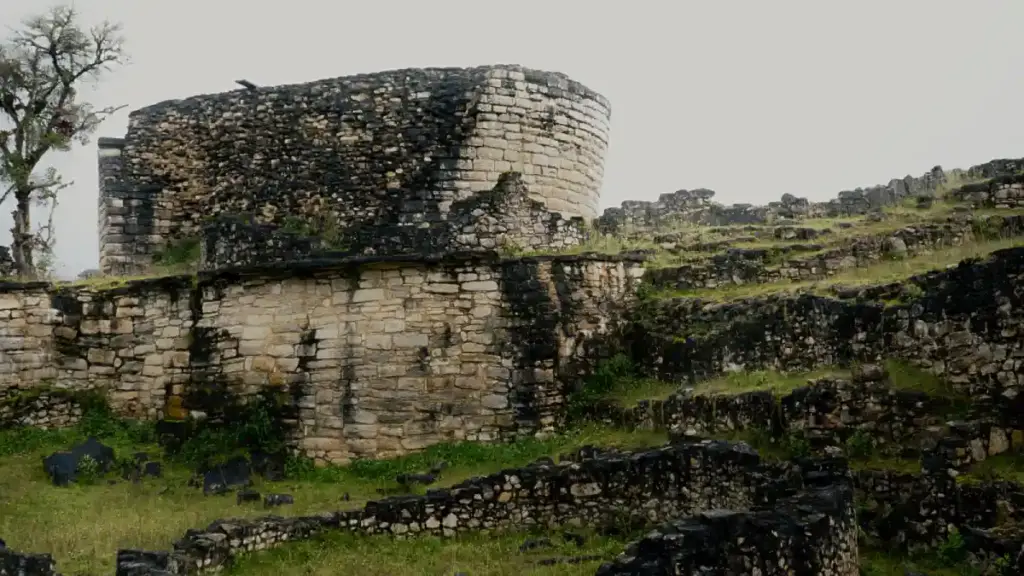
The global travel map once again places Peru at the pinnacle of international tourism. In its prestigious Best of the World 2027 selection, National Geographic has enshrined the imposing fortress of Kuélap and the Chachapoyas region among the 25 most fascinating and essential destinations on the planet—an official recognition backed by the Ministry of Culture of Peru.
While the world directs its gaze toward wonders across continents, the true heart of archaeological and natural exploration rises within the mysterious cloud forests of northern Peru.
For decades, international travel to Peru has been drawn south.
Cusco. The Sacred Valley. Machu Picchu. The Inca Trail.
They remain essential. But one of the most exciting stories in Peru right now is unfolding far to the north.
In October 2026, National Geographic included Kuélap, Chachapoyas, Peru, among its 25 Best of the World destinations for 2027, highlighting renewed archaeological access, new interpretation spaces and a growing understanding of one of Peru’s most remarkable pre-Inca landscapes.
For travelers who already know Peru — or who simply want to experience the country beyond its most familiar circuit — the timing could hardly be better.
Kuélap is not a newly discovered destination.
What is changing is how much more of its story travelers are now able to understand.
What Is Kuélap?
Kuélap is a monumental archaeological complex built high above the Utcubamba Valley in the Amazonas region of northern Peru.
It is associated with the Chachapoya civilization, the pre-Inca society that developed across the cloud forests and highlands of what are now Amazonas and San Martín.
Rather than the rectangular stone architecture most travelers associate with the Inca world, Chachapoya settlements are known for circular buildings, geometric stone friezes and an extraordinary relationship with steep mountain landscapes.
Kuélap is the largest and most famous expression of that world.
National Geographic describes the site as having been established around A.D. 500, roughly a millennium before Machu Picchu reached the form travelers recognize today.
But calling Kuélap simply a “fortress” tells only part of the story.
Archaeologists increasingly understand it as a much more complex urban, ceremonial and political center.
The Peruvian Ministry of Culture describes Kuélap as one of the principal archaeological references of the ancient Chachapoya territory, while continuing research examines its political, ritual and funerary functions.
Why Kuélap Is Suddenly in the Global Spotlight
The renewed attention is not only because of National Geographic.
Kuélap is currently going through one of the most important periods of archaeological research and conservation in its modern history.
In April 2022, part of the monumental south wall collapsed following prolonged rainfall and structural deterioration.
The loss was significant.
But it also triggered a much larger program of investigation, stabilization and conservation.
In April 2026, Peru’s Ministry of Culture announced the completion of the recovery of the affected section of the southern wall. More than 3,800 tonnes of construction material were handled during the intervention, much of it manually because heavy machinery could not be used within the archaeological complex.
Two months later, authorities presented the new Muralla Sur circuit, allowing visitors to experience one of the most emblematic areas of Kuélap from a new perspective.
And the story continues.
A New Archaeological Discovery in 2026
In May 2026, archaeologists working within Kuélap announced the discovery of a funerary structure containing the remains of five individuals — four adults and one infant.
The excavation also revealed ceremonial and utilitarian objects associated with the Late Horizon, including a regional Inca-style paccha, a carved bone object, metal fragments, stone mortars and Spondylus.
The discovery is especially significant because it reinforces something archaeologists have understood for years:
Kuélap did not simply stop evolving when the Inca arrived.
Its history includes interaction, conflict, adaptation and cultural overlap between Chachapoya and Inca worlds.
National Geographic has highlighted the broader archaeological renewal at Kuélap as one of the reasons the destination deserves attention in 2027.
What Is New at Kuélap for 2027?
The most significant change is not a new hotel or a new road.
It is better access to the archaeology itself.
The Ministry of Culture and the World Monuments Fund have been working on improvements to the visitor experience, including:
- modernization of the visitor center;
- new interpretation and exhibition spaces;
- conservation of the Malcapampa archaeological sector;
- and a new trail through areas previously inaccessible to visitors.
National Geographic specifically highlights new exhibitions at the Apu Chuillaxa Visitor Center and a new route into Malcapampa, where archaeological work is still ongoing.
That is what makes 2027 particularly interesting.
Visitors are not simply arriving at a finished monument.
They are arriving at a site whose story is still being reconstructed.
Is Kuélap Older Than Machu Picchu?
Broadly speaking, yes.
Kuélap began developing centuries before the Inca expansion that produced Machu Picchu.
National Geographic places Kuélap’s origins around A.D. 500, while Machu Picchu is generally associated with the 15th century.
But comparing the two too closely can be misleading.
They belong to different civilizations, different historical periods and different cultural landscapes.
Machu Picchu is an Inca site.
Kuélap belongs primarily to the Chachapoya world.
The better question is not which is older or better.
It is how much richer Peru becomes when we stop telling its history only through the Inca.
The Chachapoya World Goes Far Beyond Kuélap
One of the biggest mistakes travelers make is treating Kuélap as a day trip.
The real destination is Chachapoyas and the wider Amazonas region.
This is where archaeology, cloud forest, waterfalls and living communities overlap.
A thoughtful itinerary should give the region several days.
Karajía
High on a limestone cliff stand the famous sarcophagi of Karajía.
These human-shaped funerary monuments were built into inaccessible rock faces, reflecting the extraordinary Chachapoya relationship with death, altitude and landscape.
The wider Chachapoya region is known for precisely these kinds of cliffside funerary traditions.
Revash
At Revash, funerary structures resemble miniature houses constructed directly against a cliff face.
They are completely different from the monumental scale of Kuélap and reveal another side of Chachapoya mortuary architecture.
Leymebamba
For travelers interested in archaeology, Leymebamba deserves at least a full day.
Its museum preserves material associated with the Laguna de los Cóndores discoveries, including an important collection of mummified human remains and archaeological objects from Chachapoya and Inca contexts.
Quiocta
The Quiocta cave system adds another dimension to the region: geology, underground landscapes and archaeological evidence within the same journey.
Huancas and the Sonche Canyon
Closer to Chachapoyas, the village of Huancas is known for traditional pottery and views into the dramatic Sonche Canyon.
Together, these places make clear that Kuélap is not an isolated monument.
It is the gateway to an entire cultural landscape.
Gocta: Where Northern Peru Becomes Natural
If Kuélap is the archaeological anchor of Amazonas, Gocta Waterfall is its natural counterpart.
National Geographic highlights Gocta as one of the great natural attractions of the region and as part of the wider cloud-forest landscape that makes northern Peru so distinctive.
The approach to Gocta passes through the village of Cocachimba and into a landscape that feels completely different from southern Peru.
The vegetation becomes denser.
Orchids and bromeliads appear.
Birdlife increases.
Mist moves through the forest.
This is one of the great geographic qualities of northern Peru: it sits within an Andes–Amazon transition, where mountain and tropical ecosystems begin to overlap.
Where We Would Stay: Gocta Natura Reserve
If there is one property in northern Peru that reflects the direction we believe luxury travel should be taking, it is Gocta Natura Reserve.
Not because it is the largest hotel.
It is almost the opposite.
Gocta Natura has only six cabins, set inside an 82-hectare private cloud-forest reserve overlooking the Gocta area.
The project began on land previously used as pasture.
Today, the property is actively restoring native forest and habitat for birds, monkeys, orchids and other species of the Andes–Amazon transition.
That matters to us.
View has increasingly moved toward a version of luxury where comfort and conservation are not treated as opposing ideas.
Gocta Natura is one of the strongest examples of that philosophy in Peru.
The company became a Certified B Corporation in July 2024, with B Lab recognizing its work in environmental stewardship, reforestation, biodiversity measurement, community engagement, circular economy practices and women’s empowerment.
Its accommodation is deliberately small-scale.
Cabins are immersed in forest and constructed with local craftsmanship, while the kitchen emphasizes locally inspired food, regional producers and produce grown within the property itself.
This is not luxury because it removes you from the destination.
It works because it brings you closer to it.
Other Good Places to Stay in Chachapoyas
For travelers who prefer to stay closer to Chachapoyas city, there are several reliable alternatives.
Casa Hacienda Achamaqui offers a countryside setting outside the city and positions itself around local culture, nature and environmental responsibility.
La Xalca Hotel is a practical option for travelers who want to stay within Chachapoyas itself, only a few blocks from the Plaza de Armas, with architectural references to traditional colonial houses.
La Ensenada Hotel Chachapoyas is another countryside-style property, located at Fundo Santa Isabel outside the center, with rooms and bungalow-style accommodation.
For View, however, Gocta Natura would be our preferred option for a high-end, nature-led journey.
When Is the Best Time to Visit Kuélap and Chachapoyas?
Northern Peru does not follow exactly the same travel rhythm as Cusco.
The region is greener, wetter and more strongly influenced by cloud-forest weather.
For travelers prioritizing hiking and archaeology, the generally drier months — roughly May through October — tend to offer easier conditions.
But the rainy season has its own appeal.
Waterfalls become more powerful, forests intensify in color and the cloud forest becomes even more atmospheric.
The key is not simply choosing a “good” or “bad” month.
It is understanding what kind of landscape you want to experience.
Is Kuélap Open to Visitors?
Yes.
In March 2026, Kuélap was temporarily placed under an emergency conservation declaration because heavy rainfall created structural risks in some parts of the monument.
Importantly, the Ministry of Culture explicitly confirmed that this did not close the visitor circuit and that visits continued operating normally.
As with any active archaeological site, routes and access conditions can change depending on conservation work and weather.
Travelers should always verify current conditions before arrival.
Why Northern Peru Matters to View
Northern Peru is not yet part of View Signature Travels’ regular journey collection.
But it is one of the regions we are actively studying as we shape the next generation of our Peru portfolio.
For years, our strongest operational knowledge has been concentrated in southern Peru — Cusco, the Sacred Valley, trekking routes, the Andes and increasingly remote landscapes beyond the traditional circuit.
Chachapoyas represents another Peru entirely.
A Peru of cloud forests.
Pre-Inca civilizations.
Cliffside tombs.
Waterfalls.
Remote archaeology.
Small-scale lodges.
And landscapes where tourism still feels relatively light.
That combination is exactly what interests us.
We are not looking for destinations simply because they are becoming fashionable.
We are interested in places where thoughtful travel can still create a meaningful relationship between guest, landscape and local community.
Northern Peru has enormous potential to become one of those places.
View’s Perspective
What interests us most is not simply that Kuélap is receiving international attention.
It is the combination of archaeology, cloud forest, small-scale hospitality and cultural landscapes that still feel relatively untouched by mass tourism.
For View, that is where the opportunity lies.
Not in turning northern Peru into another high-volume circuit, but in designing slower, more thoughtful journeys around the region.
That means understanding the destination before selling it.
Learning which properties genuinely belong in the journey.
Identifying where local knowledge adds value.
Understanding travel times, access, weather, conservation restrictions and the rhythm required to experience the region properly.
That is how we approach new destinations.
And it is why northern Peru is currently one of the most interesting regions on our radar.
How Many Days Do You Need in Chachapoyas?
For Kuélap alone, a short stay is technically possible.
For the region, it would be a mistake.
We would currently think in terms of four to six nights.
A possible rhythm could be:
Day 1: Arrival and Chachapoyas
Day 2: Kuélap and the Utcubamba Valley
Day 3: Gocta and Cocachimba
Day 4: Karajía and Quiocta
Day 5: Leymebamba or Revash
Day 6: Forest, birding or slower time at Gocta Natura
That is not yet a formal View itinerary.
It is the kind of structure we would explore as we develop the destination properly.
Northern Peru Beyond Chachapoyas
Chachapoyas also opens a much larger conversation about northern Peru.
This is a part of the country that international travelers often overlook.
To the west lie the archaeological landscapes of Cajamarca, Trujillo, Chan Chan, Huacas del Sol y de la Luna and Chiclayo.
Farther north, the Pacific coast changes again around Máncora, Vichayito, Cabo Blanco and Tumbes.
That creates the possibility of a completely different kind of Peru itinerary:
archaeology in Amazonas,
cloud forest and waterfalls,
pre-Inca civilizations along the northern coast,
and several days beside the Pacific.
For travelers who have already experienced Cusco and Machu Picchu, that could become one of Peru’s most compelling second journeys.
Kuélap in 2027: Why Go Now?
The appeal of Kuélap is not that it is “the next Machu Picchu.”
It should never need to become that.
Its value lies precisely in being different.
A different civilization.
A different ecology.
A different architectural tradition.
A different rhythm of travel.
And in 2027, travelers have an unusual opportunity to visit while archaeological research, conservation and interpretation are visibly reshaping how the site is understood.
National Geographic’s recognition will inevitably bring more attention.
But Kuélap still offers something increasingly rare:
the feeling that there is much more left to discover.
Considering Northern Peru for Your Journey?
View Signature Travels is currently exploring northern Peru as part of the future development of our private journey collection.
If Kuélap, Gocta or Chachapoyas are part of the Peru you want to discover, tell us what you have in mind.
START DESIGNING YOUR JOURNEY
FAQ
Is Kuélap worth visiting?
Yes. Kuélap is particularly rewarding for travelers interested in archaeology, pre-Inca civilizations, cloud forest and destinations with significantly fewer visitors than Peru’s southern circuit.
Is Kuélap older than Machu Picchu?
Yes. Kuélap began developing around A.D. 500, while Machu Picchu belongs primarily to the 15th-century Inca period.
Where is Kuélap?
Kuélap is located in Luya province, Amazonas region, in northern Peru, above the Utcubamba Valley.
What is the best place to stay near Gocta?
For a high-end, nature-led stay, our preferred option is Gocta Natura Reserve, a six-cabin Certified B Corp set within an 82-hectare cloud-forest reserve.
How long should I spend in Chachapoyas?
We recommend approximately four to six nights if you want to combine Kuélap with Gocta, Karajía, Quiocta, Leymebamba, Revash and other sites in the region.
Is Kuélap open in 2027?
The site remained open through the 2026 conservation emergency, according to Peru’s Ministry of Culture. Because archaeological conservation is ongoing, travelers should verify current access before traveling.
